De merklap van Jane Austen

Op de lagere school moesten meisjes vroeger een merklap borduren, in kruissteek. Er is ook een merklap die aan Jane Austen wordt toegeschreven, voor het eerst in 2012 door de Bodleian Library tentoongesteld, maar helaas in privébezit, zodat we hem op deze reis niet kunnen zien. Er is trouwens wel een borduurpakket van te koop, zodat je hem kunt namaken.

Maar ook voor taalkundigen is de merklap interessant: op het eerste gezicht lijkt er namelijk een fout in de tekst te staan.

Give the Lord the Honour doe unto his Name

Doe, in plaats van due, het staat er echt! Dit zou bewijs kunnen zijn van wat taalkundigen ‘yod dropping’ noemen, waardoor we tegenwoordig suit (bijvoorbeeld) anders uitspreken dan vroeger. Due wordt tegenwoordig ook anders uitgesproken door Britten en Amerikanen. En waarschijnlijk dus ook door Jane Austen.


Posted in Jane Austen trip | Leave a comment

Jane Austens grafsteen

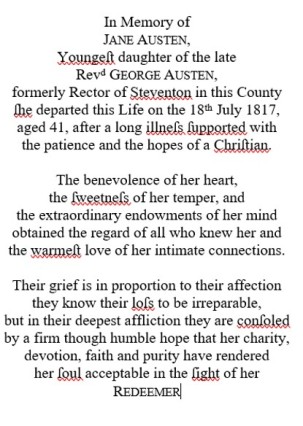
Jane Austen is op 18 juli 1817 overleden, waarschijnlijk aan de gevolgen van de ziekte van Hodgkin. Dat gebeurde in Winchester, waar ze voor medisch advies naartoe was gebracht. Ze is ook in Winchester begraven, zonder dat haar moeder en haar zus Cassandra daarbij aanwezig mochten zijn: begrafenissen waren een mannen-aangelegenheid. Haar grafsteen ligt daar in de kathedraal, met een tekst die waarschijnlijk door haar broer Henry is opgesteld, maar die geen recht doet aan haar schrijverschap.

Wat verder ook opvalt in de tekst is het gebruik van de lange <s> in woorden als illness en warmest, op een manier die voor die tijd heel ouderwets was. Misschien is hiervoor gekozen vanwege het plechtige karakter van de tekst.

Posted in Jane Austen trip | 2 Comments

Kon Cassandra ervan rondkomen?

Vlak voor Cassandra’s verloofde, Tom Fowle (1765-1797), naar West-Indië vertrok, had hij zijn testament laten opmaken. Dat was maar goed ook, want helaas overleed hij daar. Zijn testament bevatte een legaat van £1000 voor Cassandra, die hem eeuwig trouw is gebleven. Die £1000, vastgezet  tegen een jaarlijkse rente, bleef  haar enige vorm van inkomen totdat Jane stierf in 1817, en zij vrijwel al haar bezittingen aan haar zus na liet. Kon zij daarvan rondkomen? Hoeveel had zij naar onze maatstaven te besteden?

Om dat om te rekenen heeft het National Register of Archives een handig programmaatje ontwikkeld, een Currency Converter, waarmee je vrij precies kunt omrekenen hoeveel een bedrag uit het verleden waard was.

Geen onaardig bedrag dus, al vormde Jane’s erfenis twintig jaar later hier een belangrijke aanvulling op. In haar eigen testament heeft Cassandra die £1000 aan de familie Fowle ‘terugbetaald’ in de vorm van een legaat aan Tom’s postuum (voor hem dan) geboren nichtje Caroline Elizabeth.

‘Cassandra died a rich woman, you know,’ vertelde een mede-congresbezoeker me eens bij Cassandra’s graf in Chawton. Uit haar testament blijkt dat ze meer dan £5000 onder haar erfgenamen te verdelen had. En zelfs een heel klein stukje land.


Posted in Jane Austen trip | 2 Comments

Love and friendship – het thema van de reis

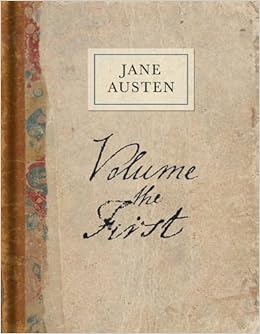
Love and friendship – in Jane Austens eigen spelling: freindship – is niet één van haar gepubliceerde romans. Het is een jeugdwerk (Juvenilia, Volume the Second), geschreven toen ze pas 15 was. Het manuscript bevindt zich in de British Library, maar tijdens de reis zullen we Volume the First te zien krijgen, dat in het beziti s van de Bodleian Library.  Online zijn de drie deeltjes van de Juvenlia te zien en te bestuderen op de website Jane Austen Fiction Manuscript, geproduceerd door Jane Austen-kenner Kathryn Sutherland. Kathryn Sutherland heeft ook prachtige facsimile-uitgaven van de Juvenilia uitgebracht.

Een filmpje over de Juvenilia is te vinden op Youtube, waar we tegelijkertijd kennis kunnen maken met Kathryn Sutherland. En van Love and freindship is een film gemaakt, in 2016.

Posted in Jane Austen trip | Leave a comment

Jane Austen en groep 7 van de Leidse Tweemaster

In het kader van de 444ste verjaardag van de universiteit Leiden, hebben verschillende hoogleraren op 8 februari 20019 gastlessen gegeven op basisscholen in Leiden en Den Haag. ‘Meet the Professor’ heette het programma. Mijn gastles ging over Jane Austens brieven, en Omroep West heeft daar een opname van gemaakt:


Posted in Jane Austen trip | Leave a comment

Garden Tours trip: Jane Austen – Love and Friendship

During the next few weeks, I will be posting bits of information especially intended for the participants of the Jane Austen trip ‘Love and Friendship’ (well, Freindship actually: more about that later) that will take place between 21 and 26 July, and which I have been asked to accompany as a Jane Austen specialist. I’ll be doing this mostly in Dutch – apologies for that to this blog’s English speaking followers!

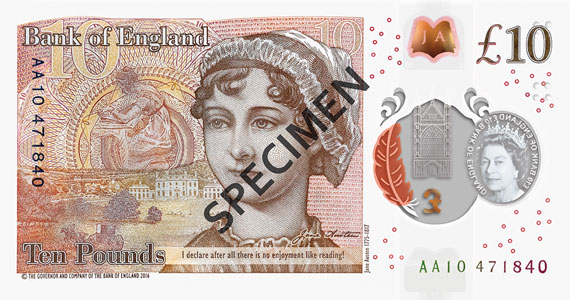
Laten we beginnen met het nieuwe biljet van tien pond, dat in 2017 is uitgegeven, de tweehonderdste sterfdag van Jane Austen.

Het is echt prachtig, maar er is van alles mee mis: Jane Austen heeft er bijvoorbeeld nooit zo uitgezien. We hebben maar één echt portret van haar, geschilderd door haar zus Cassandra, en daarop ziet ze er tenminste niet uit als een tienjarig meisje:

En dan die tekst, I declare after all there is no enjoyment like reading.  Ook dit heeft tot veel commentaar geleid, zoals te lezen is in dit artikel uit de Guardian. En hier is de passage uit Pride and Prejudice waar het allemaal om gaat: Jane Austen echt op haar best!

Miss Bingley's attention was quite as much engaged in watching Mr.
Darcy's progress through _his_ book, as in reading her own; and she was
perpetually either making some inquiry, or looking at his page. She
could not win him, however, to any conversation; he merely answered her
question, and read on. At length, quite exhausted by the attempt to be
amused with her own book, which she had only chosen because it was the
second volume of his, she gave a great yawn and said, "How pleasant it
is to spend an evening in this way! I declare after all there is no
enjoyment like reading! How much sooner one tires of any thing than of a
book!--When I have a house of my own, I shall be miserable if I have not
an excellent library." (uit: Project Gutenberg)


Posted in Jane Austen trip | Leave a comment

In favour of intensifiers

And here is Ekaterina Krokhina’s second blogpost, nicely continuing her findings after the first. A good example of work in progress.

           I am really very much indebted to you for your well-filled and very interesting letter (1832; Charlotte Brontё to Ellen Nussey)
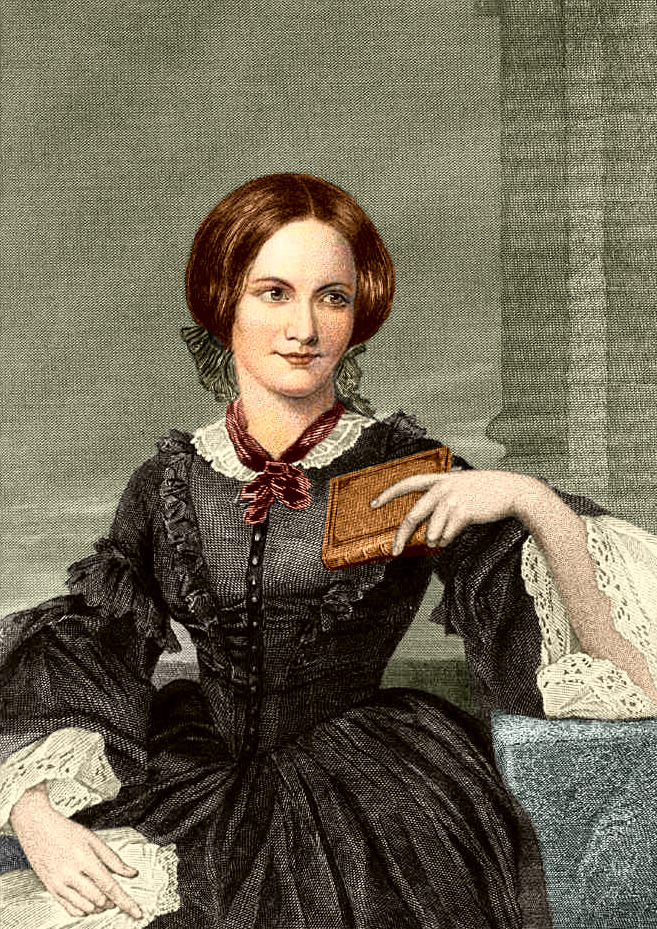
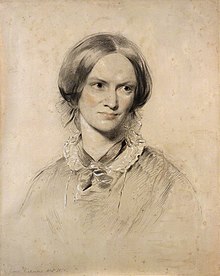
Source: WikipediaI would like to start my blog post from this opening of Charlotte Brontё’s  (1816–1855) letter to her best friend Ellen Nussey (1817–1897) in order to remind you, readers, how precious letters used to be for people. If we want to send a letter now, we can do it easily, as a piece of cake, although nowadays it will be most likely not a real letter but an electronic one. The attitude towards letters was completely different in the past. Have a look at the phrase above one more time and pay attention to this part “I am really very much indebted”. Don’t you think this part is a little bit overcrowded with intensifiers? Still the intensification is not finished yet, we can see that “well-filled and very interesting” are coming next. After coming across this “over- intensified” sentence and a few similar ones, I decided to check the whole first volume of Charlotte Brontё’s correspondence. I was particularly interested in her use of intensifiers. To my surprise it turned out that very was the most frequent intensifier in her letters. Charlotte Brontё also used most but not as often as very. In the first volume of her correspondence she used very 415 times and most only 127 times.

Mustanoja reports that ongoing renewal of popular intensifiers happens all the time. The first shifts can be traced back to the twelfth century (1960, p. 319), as illustrated in this overview: 


As the table shows, there were two main intensifiers really and very, which were the most common in the eighteenth and nineteenth centuries. Charlotte Brontё was obviously in favour of very, using really only 55 times in the first volume of her letters. Her usage of really is 7.5 times lower than that of very, interesting, isn’t it?

My first blog post, was devoted to Charlotte Brontё’s usage of most. At that time I couldn’t answer the following question: Why did she use most as an intensifier? Now, I would like to suggest that she used most as a semantic synonym of very. These two intensifiers (with the exception of cases where most served as a superlative) were sort of interchangeable in her letters.

Here are some examples:

  1. I feel most anxious to learn how matters progress (Charlotte Brontё to Ellen Nussey, 1845)

      We feel very dull without you (Charlotte Brontё to Ellen  Nussey, 1840)

  1. On that day we shall all be most happy to see you, and till then believe me to be (Charlotte Brontё to Ellen Nussey, 1833)

      We shall be very happy to wait upon yourself and Sister… (Charlotte Brontё to Miss Ann Greenwood, 1836)

  1. ….and very welcome messengers they are (Charlotte Brontё to Ellen Nussey, 1845)

      Your letter and its contents were most welcome (Charlotte Brontё to Ellen Nussey, 1847)

      You must excuse a very short answer to your last most welcome letter (Charlotte Brontё to Ellen Nussey, 1841)

These examples show that Charlotte Brontё indeed used very and most quite interchangeably.

According to Quirk et al. (1985), the most rapid and the most interesting semantic developments in linguistic change are said to occur with intensifiers (1985, p. 590), and Peters (1994) claims that “[t]his area of grammar is always undergoing meaning shifts partly because of speaker’s desire to be original” (1994, p. 271). I assume that Charlotte Brontё was also quite “original” in her use of intensifiers. In any case, she was clearly in favour of them.

References:

Brontë, C. The letters of Charlotte Brontë: with a selection of letters by family and friends (1829-1847). M. Smith (ed.). Vol. 1. Oxford and New York: Oxford University Press.

Mustanoja, T.F. (1960). A Middle English syntax. Helsinki: Société Néophilologique.

Peters, H. (1994). Degree adverbs in early modern English. In Dieter Kastovsky (ed.), Studies in Early Modern English, 269–88. Berlin & New York: Walter de Gruyter.

Quirk, R., Greenbaum, S., Leech, G. & Svartvik, J. (1985). A comprehensive grammar of the English language. New York: Longman.

Posted in 19th-century letters | Tagged , | Leave a comment

Musical Correctness: “One Stroke and You’ve Consumed My Waking Days”

Source: Wikipedia

And here is Ilse Stolte’s first blog post for the MA course Late Modern English Letters:

In Lin-Manuel Miranda’s musical on Alexander Hamilton’s life (1757-1804) – aptly named Hamilton – a lot is said (or sung) about letters. One song in particular – namely, Take a Break – partially focusses on the relationship between Hamilton and his sister-in-law, Angelica Schuyler Church, and the letters they write to each other. Their relationship in the musical is a complicated one; Angelica and Alexander fall in love at first sight, but they are unable to marry and Alexander marries Angelica’s sister Elizabeth instead. However, their love for each other does not die away and during their lives, they write each other many letters.

One verse of the song Take a Break focusses on an opening formula used by Hamilton to Angelica and how that betrays his feelings towards her:

In a letter I received from you two weeks ago

I noticed a comma in the middle of a phrase

It changed the meaning, did you intend this

One stroke and you’ve consumed my waking days, it says

My dearest Angelica

With a comma after dearest, you’ve written

My dearest, Angelica

The musical is, of course, a dramatisation of history, and creative liberties have been taken. For instance, when they met in real life, Angelica was already married, whereas in the musical she is not. So, how accurate is this portrayal according to the actual letters Hamilton wrote to her? We might not be able to know for sure if their relationship went beyond being family and friends. However, by looking at their real letters, we can see if they did enjoy such a close relationship.

On the website Founders Online, all the surviving papers of the US Founding Fathers have been transcribed in collaboration with the University of Virginia Press. Amongst these papers, Hamilton’s papers can be found as well, including fifteen letters he wrote to Angelica from 1785 to 1800. In these letters, the closeness of their relationship is evident. For example, in his letter to her written on 3 August 1785, he calls her “one great source of happiness”.

However, to see how close they were, you do not even need to look at the letters themselves; the opening and closing formulas show that Hamilton felt a lot of love and respect for Angelica.

In the letters, Hamilton addresses Angelica as “My Dear Friend”, “My Dear Sister” and “My Dear Angelica”. In only fourletters, does he use these as a traditional opening formula at the beginning of the letter; in most of the letters, their closeness is shown by Hamilton imbedding these opening formulas into the first sentence of the letter itself. For example:

It is an eternity Dear Angelica since either your sister or myself have received a single line from you.

In the letters, it is clear from his opening (and even closing) formulas and the language and the topics of the letters themselves that Hamilton very much cared about Angelica, but whether there was something more between them than mere friendship and kinship remains a question to me.


Posted in 18th-century letters | Tagged | Leave a comment

On the history of most

I’m teaching a course on Late Modern English letters this semester, for which all participants (as in earlier courses on the subject) have to write two blog posts on a topic relating to what we’re doing in the course. Here comes Katja (Ekaterina) Krokhina’s first blogpost. 

Sourse: Wikipedia

It goes without saying that everybody who speaks English has heard of the adverb most. What comes to your mind first when you hear this word? The superlative form of comparison perhaps? How many of you, readers, have thought of most in the function of an adverbial intensifier? In this blog post, I would like to shed some light on most as an intensifier. In order to do so I will travel back in time, to the days of Charlotte Brontё (1816–1855).

While reading Charlotte Brontё’s letters, I came across some unfamiliar examples related to the case of most. Here are some of them:

  • I am most grieved (Charlotte Brontё to Ellen Nussey, 1836)
  • On that day we shall all be most happy to see you, and till then believe me to be (Charlotte Brontё to Ellen Nussey, 1833)
  • However I thank both you & your Mother for the invitation which was most kindly expressed (Charlotte Brontё to Ellen Nussey, 1839)
  • Richard most kindly disbursed all the expenses (Charlotte Brontё to Ellen Nussey, 1833)
  • I laughed most heartily at her graphic details (Charlotte Brontё to Ellen Nussey, 1836)

In these examples, Charlotte Brontё usesmost as an intensifier with a meaning that is close to very. But how come that nowadays this usage is not in favour anymore? This was exactly the question which I asked to myself. To see what scholars say about this question, I have done some research and here I am with the freshly baked answer.


Source: Wikipedia

Tauno Mustanoja (1912–1996), a philologist and scholar of Medieval and Middle English, together with the Dutch linguist Elly van Gelderen described the origin and historical route of the adverb most (2016: 328). According to Mustanoja and van Gelderen, most used to be common in early ME, but it gave its way to almost (all+most) after the middle of the thirteenth century. Although most never disappeared completely from the English language, this adverb bit by bit lost its intensifying function, starting to establish itself in the system of “multiple comparisons” (2016: 328). Following Mustanoja and van Gelderen, “multiple comparison” is defined as “the use of more and most with the inflectional comparative and superlative”, for example, “moste clennest flesch”. Later on, with the increasing use of the periphrastic system of comparison, the usage of most as a superlative became quite common from the fourteenth century onwards (Mustanoja). Nevertheless, this is a different story.

Going back to the topic of intensifiers in Charlotte Brontё’s correspondence, it should be said that she had two personal “favourites” among them: very and most. I am already looking forward to discussing these two intensifying adverbs in my next blog post, to see which one she preferred in her letters. For all that, it would be quite interesting to know if there are any people nowadays who still use most as an intensifier. Would it be acceptable to say, for example, it is most interesting or I think it is most exciting? Please let me know if you have any ideas on this topic.

References:

Brontë, C. The Letters of Charlotte Brontë: with a selection of letters     by family and friends (1829−1847). M. Smith (ed.). Vol. 1. Oxford and New York: Oxford University Press.

Mustanoja, T. F., & Gelderen, E. van (2016). A Middle English Syntax : Parts of Speech. Amsterdam: John Benjamins Publishing Company.

Posted in 19th-century letters | Tagged | Leave a comment

Late Modern English letters in the classroom

Last Friday, I taught a class of 11-year olds about Jane Austen and her letters. What an amazing experience it was. The occasion was the University of Leiden’s 444th birthday, for which a programme called “Meet the professor” was set up. The school that invited me was the school my own kids went to, more than 20 years ago.

Posted in letter writing, news | Leave a comment