“Your ever attached …”

Elizabeth Barrett Browning (source: Baylor Digital Collections)

Below follows Marlies Reitsma’s second blogpost:

I remembered seeing an unusual subscription in a letter written by Elizabeth Barrett Browning a while ago. I searched for the subscription again in the digital collection of the Browning Letters and found it: Your ever attached – Ba, which she writes in a letter addressed to Anna Brownell on 10-14 May 1859. She varies the subscription as well, as a letter to Hugh Stuart Boyd from May 1830 shows, in which  she writes: Your grateful & attached friend EB Barrett. She used this subscription and its variants in 102 of her letters, which is quite often.

I had never seen this subscription before, which made me wonder if it was a common formula to use in the subscription of nineteenth-century letters. If it was, I imagine it will be mentioned in the Oxford English Dictionary (OED), as the two common subscriptions, yours sincerely and yours affectionately, are, about which the OED says: “Used in the subscription of letters” and “Also used in the subscription to correspondence”, respectively (OED, s.v. “sincerely” and “affectionately”).

The lemma attached did not give any results in the OED with regard to the subscription of letters. Therefore, I do not believe this was a very common formula to use in the subscription to correspondence, even though Elizabeth used it more than a hundred letters. It seems likely that this is a subscription which is characteristic to Elizabeth Barrett Browning.  I’d be interested to hear from readers of this blog whether this is indeed the case.

Reference:

Bijkerk, Annemieke (2004), “Yours sincerely and yours affectionately. On the origin and development of two positive politeness markers”, in: Journal of Historical Pragmatics 5(2), 297-311

Posted in 19th-century letters | Tagged , | Leave a comment

Holland through the eyes of an Englishman: Joseph Banks in The Hague

And here is Ilse Daalhof’s second blogpost:

Among  the Papers of Sir Joseph Banks, which I also mentioned in my last blog post, I found a series called “Journal of a Tour in Holland”. The series consists of 81 pages on a trip Banks made to Holland in 1773, from 12 February to 22 March, and it provides us with his impressions of our country.

William V of Orange (source: Wikipedia)

It might be interesting to know that Banks was not intimidated by the Dutch Stadtholder Willem V of Orange. We can read from his journal that he was not at all impressed by the court nor by his palace. I transcribed the parts of this journal that illustrate this.

From hence we went to Sir Lyonet in order to see his Cabinet of Shells about half which we went through then ran home to dress & went to Sir Jos Yorke who receivd us with the utmost politeness carried us about to all the foreign minister & then to the Prince of Orange whose court was not very magnificent.

The apartments of the Palace were by no means so […] or so handsomely furnishd as those of a noblemens hence in England they were warmd by ill made rusty grates in which Peat was burnd.

Wilhelmina of Prussia (source: Wikipedia)

Banks had something to say about the prince’s wife, Wilhelmina of Prussia, as well, who he thought was not very polite:

We proceeded to the Princess who receivd us also attended by only one ill dressd woman she did not ask us to set down or any one question but whether or not we came from England.

What I thought was interesting is that Joseph Banks commented on the Prince of Orange’s English. Apparently, Banks was quite surprised by the proficiency of the prince’s English and that he was clearly more mannerly than the princess:

We were receivd in a private apartment & asked to let down the Prince spoke English intelligibly & askd some few questions.

De Nieuwe Doelen in 1755 (source: http://historie.hdpnet.nl/stjdoelen.htm)

I think it is safe to say that Joseph Banks was quite used to some luxury, was critical about what he found in Holland in this connection. Even the rooms in the hotel ‘den Nieuwen Doelen’ in The Hague got some heavy criticism. This hotel, which now houses The Hague’s History Museum, was one of the most elegant buildings of that time. Furthermore, Banks questions the taste of Dutchmen in general.

After our audience we returnd to count Bentincks & dind at 6 we went to a concert which was given at the New Doele in a miserable room much resembling a Barn but hung round with tolerable pictures of those who formerly formd the doele a society to whom the house belongd at that time people of the first rank in the country our room tho lighted by a fire at one end & a stove at the other was intolerably cold about 100 midlingly dressd people which we were told was not a thin assembly were there the musick intolerably indifferent & stunningly loud. 

Their only singer was an intolerably bad Italian buf who sang many songs very ill & among the rest that elegant air in il Philosopho – done which in the mouth & with the action of a buf made surely a most ridiculous figure so much for dutch taste.

Clearly, Joseph Banks was not at all impressed by the Dutch court and its customs. It strikes me that a man who had seen so much of the world was disappointed with the apparent austerity of the Netherlands. This makes me wonder: was England really that much bigger, more luxurious and extravagant? Or was Joseph Banks always this dissatisfied? Nevertheless, it seems as if through the eyes of a foreigner Holland was not that  impressive.

Posted in Uncategorized | Tagged , , , | 1 Comment

A final Adieu

Ilse Daalhof wrote the following blogpost, on the correspondence of Sir Joseph Banks, which she has been studying:

In the week we were looking at opening and closing statements of letters, I stumbled onto what appeared to me a unique closing statement in the papers of Joseph Banks. Sir Joseph Banks is one of the people who had many correspondents and whose letters and papers have mostly been preserved. The papers of Sir Joseph Banks contain the correspondence received by Joseph Banks through many years full of influential connections on all aspects of Australian proceedings. Among them are a few letters from Charles Clerke (1741-1779), Captain James Cook’s companion on his last voyage.

Charles Clerke (source: Wikipedia)

As I was scanning for opening and closing formulas, I noticed an unusual closing formula in the last letter sent by Charles Clerke:

These are most sincerely the warmest & sincerest wishes of your devoted affectionate & departing servant.

There are a few things about this closing formula that are unusual. First of all, there is no repetition of the address. During the Late Modern English Period closing formulas usaually consisted of three standard elements, and we might there fore have expected to find the following:

  1. The repetition of the address
    I am, Dear Sir,
  2. The compliments or services
    Your most obedient and humble servant
  3. The signature
    ChaS Clerke

Usually, the longer the formula, the more polite it was, but even in the longest formulas, these three elements could be distinguished. Though this closing formula contains the “compliments” or “services” that were common in these formulas and the signature, there is no repetition of the address, My ever honoured friend, which is itself also quite unconventional. Instead of ending his letter with the common I am formula, Charles Clerke put emphasis on the wishes he had for the receiver.

This uncommon closing formula might be explained by the departing aspect that is in it. But why ‘departing’? Knowing Charles Clerke was a naval officer, I thought he might be going on a new voyage. However, reading the rest of the letter, it becomes clear what this is all about: this is the last letter of a dying man:

Now my dear & honoured friend I must bid you a final adieu; may you enjoy many happy years in this world, & in the end attain that fame your indefatigable industry so richly deserves.

As Banks’s friend and companion, Charles Clerke had been corresponding with him for some time. During his last voyage with Cook, suffered from a severe disease.  As the Dictionary of Canadian Biography writes: “a spell in the Fleet prison in London as the guarantor of another’s debts had left him with tuberculosis”. Charles Clerke himself knew this very well:

The disorder I was attacked with in the King’s bench prison have proved consumptive, with which I have battled with various success, […] It has now so far got the better of me, that I am not able to turn myself in my bed, so that my stay in this world must be of very short duration.

From this letter we can conclude that Charles Clerke was a dear friend of Joseph Banks, bidding him a last farewell, but more importantly that in the last days of the writer, the rules of letter writing formulas were no longer essential to a letter.

Posted in 18th-century letters | Tagged , , , | Leave a comment

Call me ‘Ba’

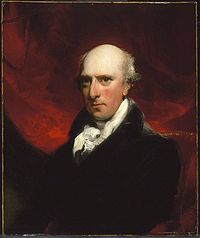
While doing research on the correspondence between Elizabeth Barrett Browning (EBB) and Sir Uvedale Price in the Browning Letters corpus published online by Baylor, I came across an interesting development in opening formulas. Sir Uvedale and EBB met when he was nearly eighty years old and she was in her twenties. According to the Oxford Dictionary of National Biography, Sir Uvedale was impressed by EBB’s  ‘Essay on the mind, with other Poems’ (1826), and struck up a friendship with her.  In their letters they discussed a wide variety of subjects such as classical Greek pronunciation and poetry, and they even criticized each other’s work. EBB paid visits to Sir Uvedale’s hometown Foxley to talk about their shared interests. In one of her letters, EBB wrote that ‘Mr. Price’s friendship has given me more continual happiness than any other single circumstance ever did’. Their friendship was thus a close one. This relationship is reflected in their use of opening formulas, and it lead to the following interesting opening. On 17 November 1826, Sir Uvedale opened his letter to EBB as follows:

Sir Uvedale Price source: Wikipedia

Sir Uvedale Price
source: Wikipedia

As I have taken the liberty of calling you Ba, I shall not be more ceremonious in writing than in speaking; & therefore in this, & in all future letters, unless you forbid me, shall quit dear Miss Barrett, for dear Ba

EBB accepted this rather bold proposal in her next letter to him, replying to him in December:

EBB Source: Wikipedia

EBB
Source: Wikipedia

As you have permitted me to express opinions on more important subjects, you must let me assure you, dear Sir, that “Ba” is much better pleased to hear from you than “Miss Barrett” could be


In every letter after this, Sir Uvedale opened with “Dear Ba”. Their friendship unfortunately was strong but short-lived. Two years after meeting, Sir Uvedale died at the age of 82.  On his death in 1829, EBB wrote a poem to commemorate her friend: ‘To the Memory of Sir Uvedale Price, Bart’.

Posted in 19th-century letters, letter writing | Tagged | Leave a comment

The Bluestocking Corpus to be published in 2015

A few days ago Anni Sairio published an exciting blog post on Dynamics of Change in Language Practices and Social Meaning (1700–1900). She announced that The Bluestocking Corpus will probably be published in 2015! What is even more exciting is that the corpus will be open source.

I will definitely have a look when it is published.

Posted in 18th-century letters, Uncategorized | Tagged , , , , | 1 Comment

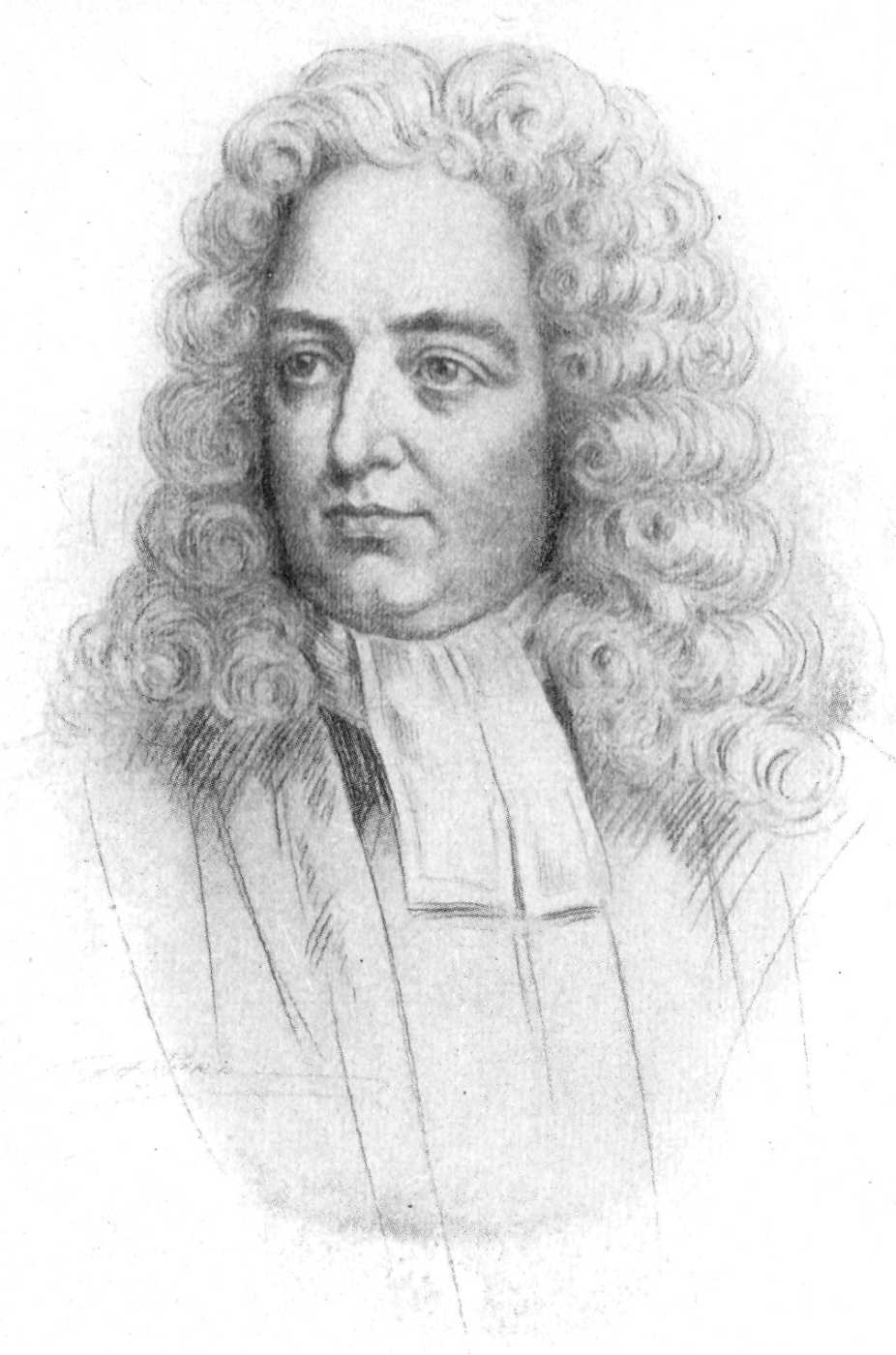
“Ugly, awkward Slutt”

Jonathan Swift (1667-1745)

Jonathan Swift (1667-1745)

Last week, I was reading through the out-letters of Jonathan Swift (1667–1745)* in order to build a reference corpus for my research on the language of John Gay (1685–1732). While reading, I came across something which seemed very shocking to me. I found the following sentence in a letter Swift wrote to Miss Esther Vanhomrigh (c.1688–1723) on 15 August, 1712:

But Mrs Touchet is an ugly awkward Slutt.

Swift does not elaborate on why Mrs Touchet is a ‘Slutt’, nor does he mention her anymore in any of the letters I read. Knowing that the eighteenth century is known for its politeness, one can imagine my surprise and shock at finding the word ‘Slutt’ in this letter, especially in so brief and direct a comment. In fact, even in the twenty-first century, this is not a word to be used lightly. But perhaps the word did not mean back then what it means today?

According to the Oxford English Dictionary (OED), the oldest use of Slutt, which is of doubtful origin, refers to “a women of dirty, slovenly, or untidy habits or appearance; a foul slattern” (OED, s.v. slut). It could also mean “a kitchen-maid; a drudge”, though this meaning was rarely used.

Its earliest appearance was in 1402 (so more than 300 years before the instance I found in Swift’s letter ,which indicates that the word had been in use for quite some time) in Letter of Cupid by Thomas Hoccleve (c.1367–1426): “The foulest slutte of al a tovne”.

The other appearances provided by the OED all indicate that the word in its earliest form meant something along the lines of “untidy appearance” or “ugly woman”.

In 1621, scholar Robert Burton (1577–1640) wrote in The Anatomy of Melancholy: “Women are all day in dressing, to please other men abroad, and goe like sluts at home”.

Another eighteenth-century instance of the word is in Thomas Hearne’s (bap. 1678, d. 1735) Remarks & Collections in 1715: “Nor was she a Woman of any Beauty, but was a nasty Slut”.

Thus, even though I had not come across another instance of Slutt before in any eighteenth-century letter, my initial surprise at seeing the word was fortunately a bit unnecessary. The word simply had a different meaning in earlier centuries than it has today. Unless Swift was ahead of his time and was somehow aware of its twenty-first-century meaning …

(Unfortunately, I was not able to find out any amore about the identity of this “Mrs. Touchet” on whom Swift comments that she is “un ugly awkward Slutt” in the ODNB or through Google: perhaps readers of this post will know more about her?)

* For the life-dates of all the people mentioned in this blogpost, I am relying on ODNB.

Reference:

Swift, Jonathan. The Correspondence of Jonathan Swift. Ed. by David Woolley. Vol. 1. Frankfurt am Main: Peter Lang, 1999.

Posted in Uncategorized | Leave a comment

Corpus Annotation

This post will illustrate different possible ways to add additional information to your data and builds forth on the tools discussed in my previous post. Corpus annotation makes it possible to retrieve specific data systematically. It might be a bit overwhelming, but just take some time to read the about pages of the programme websites.

I prefer to use notepad++ to annotate my datasets; it is the programme shown in the examples below. It is also possible to prepare and annotate your datasets in other text processing software (Word or the notepad application already available on your device). However, I favour notepad++ because you can open different datasets in tabs. If you want to change a tag in all files, you open all your data in tabs and change the tag in one go instead of changing it in every file manually.

Annotating means adding (linguistic) information to your data. The most basic method of adding information is by manually adding metadata – data about your data. The metadata, for example, describes whether the letter is an in or out-letter, to whom it was sent, and when it was sent. In concordancing programmes it is possible to search on letters from, for instance a specific year, if this is defined in the metadata. Defining metadata can be done with XML. The tags are customisable; you can assign the words you deem necessary to certain classes. In XML elements are embedded elements inside other elements as in the example below; always open <word> and close </word> the element. You can add additional information on a lot of other things, such as the publication source.metadataAnother type of interesting metadata is editorial metadata. These are for example additions, omissions, corrections and strikethroughs in the text itself. Annotating this information makes it easier to retrieve corrections in a text as you only have to search on the assigned tag. For instance: <strike>fi</strike> <corr>if</corr> he had. In a concordancing programme you can systematically search on all the items containing <corr>.

The automatic approach to corpus annotation includes part-of-speech (POS) annotation and semantic annotation. These tags are inline with the rest of your data (see example below).POSThe most widespread tagset for POS tagging is CLAWS (Constituent Likelihood Automatic Word-tagging system) C5 (simple tags) and C7 (incorporates more complex tags than C5 and punctuation mark tags). You can use the online free version of the tagset and the keys to C5 and C7. Another free accurate POS tagger is TagAnt. In both programmes you either paste the text or open the file and the programme will automatically annotate POS in your data. If your data has a lot of spelling variation you might want to use VARD or MorphAdorner first to normalise spelling and grammar (programmes also work on Early Modern variations as well) in order to make the POS tagger more accurate. When your data contains POS tagging it is possible to search on specific grammatical features (look at the keys first!), for example the passive construction exists of be verbs (in C7 these are VB0, VBDR, VBG, VBI and VBV, so you search with a wildcard: *_VB*) and the past participle form of the lexical verbs (search on *_VVN). You can do this with other constructions as well. POS search

Lastly, you can tag your dataset on semantic domains. This works more or less the same as POS tagging. Semantic domains can reveal information about ideologies or might help analyse politeness within the Brown and Levinson framework. The free online tagset can be consulted here and the key for the tags here.

I deliberately tried to keep this post as short as possible. If anything is unclear or if you have any other questions or comments please ask them below.

Further reading

Garside, Roger, Geoffrey Leech & Anthony McEnery (eds.). 1997. Corpus Annotation: Linguistic Information from Computer Text Corpora. London: Longman.

Rayson, Paul. 2008. From key words to key semantic domains. International Journal of Corpus Linguistics 13(4). pp. 519–549.

Posted in Uncategorized | Tagged , , , | Leave a comment

Fluency in an English letter from Queen Wilhemina

Here is Jiayan Xu’s first blogpost:

During our visit to the Dutch Family Royal Archives in The Hague, I looked at one of the letters of Queen Wilhemina, intending to see how good her English was at that time. On 23 December 1896, she wrote a letter to Miss Saxton Winter (1857-1936), who was her English governess, and she appears to have written very fluent English.

Wilhelmina, two years after she wrote the letter (source: wikipedia

First, her sentence structure is comparatively complex, such as the use of adverbial clause of concession in the beginning: “Although I am sending you a card, I must just write you a very happy X mas”. There are also other complex sentences, such as it-cleft sentences for emphasis, as in “It is also for me a wide blame to know that you have no more helped me …”.

Second, almost all the spelling in the letter is almost entirely correct, except that she spelt describtion  for description, which might show that she was still in the process of learning English writing. (She was about sixteen at the time.) Another example of this is that some English words like handy and hearty in the letter do not have the meaning that we find the in OED. According to the OED, handy first appeared in 1673, meaning “A wooden pail, small tub, or (occas.) dish with an upright handle on one side; a piggin”; hearty has a list of meanings in the dictionary: as a noun, it refers to “an affectionate form of address”, e.g. “my hearty”). Apparently in Queen Wilhemina’s letter, hearty and handy seem to have the meaning of small heart and hand. I would consider this as an example of Dutch interference, which has diminutives such as handje and heartje. Therefore her writing seems still influenced by her first language and includes some interesting Dutchisms.

Wilhemina’s use of short forms not only shows her intimate relationship with the addressee, but also demonstrates that her English writing is very skilled. For example, she used the ampersand, as in “… for you & that both your mother & sister may be well …”. Furthermore, in the OED (online edition, s.v. “Xmas”), the list of the uses of Xmas contains five entries (from 1551-1875). Thus the abbreviated form Xmas had already been used well before this letter, which demonstrates at the same time that the 16-year-old former Dutch queen had already been very skilled in English writing. X-mas appears twice in this letter, though in the closing formula the complete form Christmas is still used, which seems to some extent formulaic.

Additionally, though people may consider two superlatives grammatically wrong today, I personally do not think most dearest in the opening of this letter a mistake. Evidence can be found already in the sixteenth century, when Shakespeare wrote in his play Julius Caesar “the most unkindest cut of all”. Although we need to take into account that in the course of several centuries English grammar changed and that double superlatives are no longer considered grammatically correct in standard English, it seems to me that this use of double superlatives by Wilhelmina expresses closeness with Miss Saxon Winter.

Overall, the 16-year-old former Dutch queen Wilhemina, as an L2 English learner, wrote very fluent English at that time, including the use of abbreviations, complex sentences and a deliberate exploitation of what is strictly speaking incorrect grammar. In this light the presence of a number of apparent Dutchisms is very interesting indeed.

Posted in letter writing | Tagged , | Leave a comment

Disappointment strikes: NOT a new letter by Jane Austen

Last week, the Mail Online wrote that a “Previously unseen letter by Jane Austen where she first writes about Pride and Prejudice goes on public display for the first time”.  The letter is described as a “handwritten note, which lay undiscovered in a box file for 60 years, will be exhibited at Torquay Museum in Devon ahead of a planned auction”. The museum hopes to fetch £200,000 for it.

Jane Austen’s Letter 17 (source: Mail Online)

But what do they mean by “previously unseen”? It is not a new letter: the letter is Letter 17 in Deirdre LeFaye’s edition of Jane Austen’s correspondence (4th ed., 2011), and it also appears in Jo Modert’s facsimile edition of the letters (1990). No new letters by Jane Austen have come to light for a long time now, so the expectations raised by the announcement were sorely disappointed.

So who decided to announce it like this? The Mail Online? Or the Torquay Museum in Devon? It is certainly a good way of making potential buyers interested. But Austenites will be disappointed.

Posted in news | Tagged , , | 1 Comment

Sparroy, Toadelcrancz, Il Giotto, and Goatus esq.

And here is Sopio Zhgenti’s first blogpost:

Virginia Woolf’s letters are a fascinating source for many things, but also, as I discovered for her use of nicknames, which we find for many of her correspondents including herself, in the opening and closing formulas to the letters.

Wikipedia

Instead of formal names or regular first names, Virginia Woolf chose to adopt nicknames. But not for everybody: the nicknames are only found in letters addressed the people she was close to. For these, she chose not randomly created names but animals. Every close friend was given the name of an animal, and she had one for herself as well. Sometimes she even created compounds, for instance Sparroy, with which she referred to herself, which seems to be some mixture of sparrow and monkey. As Nicolson, the editor of her letters, wrote: “She creates a menagerie of aliases for herself – Sparroy (sparrow + monkey?)” (1975: xviii).

All this suggests that Virginia Woolf differentiated between two types of letters: formal and informal ones, based on who she wrote to, very close friends/relatives or mere acquaintances. The choice of nicknames for her friends can be interpreted as an act of positive politeness. In her use of formulas, Virginia Woolf sticks to established norms of letter writing. Her letters mostly begin with my dear/dearest + addressee and end with Yr/Yrs. Affect. Consequently it is easy to see how her letters vary from being very formal to informal. In letters to Henry Newbolt (L.41 January 1902) and Violet Dickinson (L.42; 1902) for example, we find the following opening and closing formulas:

  • Dear Mr. Newbolt … yrs very sincerely, Virginia Stephen.
  • My woman/yr. lover, Sparroy.

Wikipedia

Henry John Newbolt was a poet who did not have very close relationship with Virginia Woolf, whereas Violet Dickinson was her best friend and even more than a friend:  “it seems that the first person with whom she forged an intimate relationship was Violet Dickinson” (Koulouris 2011:100). The special closeness Virginia felt for Violet is clear from the way in which she addressed her in the letters, where we find My Violet/My child/My beloved woman/My woman as openings and  Yr Aff., AVS/Yr. Sparroy/Yr. Sp. Etc. It is also interesting to see how Virginia’s attitude changes in the course of her life. In the very first letter her opening and closing formulas are My dear Miss Dickinson/Yours sincerely, Virginia Stephen, while in the second letter we already find My Dear Violet and Yrs aff’ly VS. In  her eighth letter where Violet is addressed as My dear aunt, and Virginia signs herself Yr loving Sparroy.

Other interesting figures are Thoby who was Virginia’s elder brother and George Duckworth who was her elder half-brother. According to the Oxford Dictionary of National Biography,

After the deaths of Mrs Stephen and Stella there was no controlling George Duckworth, her elder half-brother, who would prowl by night, and pounce. He was his sister’s “first lover” according to Virginia’s memoir “22 Hyde Park Gate”:

Creaking stealthily, the door [of her bedroom] opened; treading gingerly someone entered. “Who?” I cried. “Don’t be frightened”, George whispered. “And don’t turn on the light, oh beloved. Beloved—” and he flung himself on my bed, and took me in his arms. (Moments of Being)

Though he fondled his sister by night, by day he ridiculed her appearance and spoke of her as “the poor goat’ (ODNB)

From her letters it is obvious that she did not have as close relationship with George as with Thoby. Nevertheless, she signed her letters to both men with your old goat, as if she did not want to differentiate between them. But differences are very obvious in the content of the letters. Virginia wrote fewer letters to George than to Thoby, though all the time she used the same opening and closing formulas: My dear old BarYour old goat.  (Old Bar was another nickname, but it needs further investigation to find out whether the name signifies anything or not.) Whereas Thoby was someone with whom she shared her ideas about Greek as well as about everyday life, she sometimes even called him your highness.

Other examples of Virginia Wool’s amazing name compounds are the following. In one of the letters to Emma Vaughan, she addressed her cousin with beloved Toadelkanz (L. 31; 1900), a combination of Rosencrantz and Toad, though usually she abbreviates the name to Toad. In a joint letter to Emma and Margaret Vaughan she started with beloved animals and cousins, and she ended by calling herself “Giotto”: Your expectant cousin, Il Giotto (L 32;  1900).

Virginia Woolf’s use of nicknames for herself and her most intimate correspondents is very interesting. . From social psychology it is known that nicknames serve as a form of

“social control, contributing to socialization, marking group boundaries, building camaraderie, catalyzing joking, conveying discontent, cathartically venting frustrations, equalizing social exchanges and adjusting to labelling. Although the nicknaming and collateral social processes we encountered were not the product of formal planning, they are a complex and highly organized set of micro political activities. In the future, nicknames should be thought of as key symbols that can unlock many meanings when they are properly interpreted” (Fortado 1998:13)

In some cases, Virginia’s choice of nicknames was obviously determined by some literary characters, authors or painters. In other cases she hide herself behind forms like goatus esq.Sparroy, Kangaroo, Wallaby.  According to Fowler (2012: 154), “In the Bloomsbury circle, nicknames were both abundant and polymorphous”. In time, her nicknames transformed into fictional names, so from Goat we get Goatus esq. etc.: nicknames, according to Lee (1996:iii), nicknames “would then in turn be nicknamed, and the animals would reproduce by a literary parthenogesis into yet more beats. So Goat or ‘the goat’ becomes Goatus esq. Capra, Il Giotto; Emma Vaughan’s ‘Toad’ would be ‘dearest Reptile’ or Todkins, Toadlebinks or Toadelcrancz; The Ape might be the Apes, or Singe or Singes”.

Nobody will probably be able to say what made Virginia Woolf choose these nicknames or what do they signified for her, but one thing is certain: opening and closing formulas as well as the names that she created are an important feature in her correspondence. They determine the degree of closeness to people, dividing her correspondents up into different social categories. For Virginia, opening and closing formulas are not some established rule of letter writing: they are a source for creativity, as well as a source for fiction.

References:

Fortado, Bruce, 1998, Interpreting Nicknames: Micro political portal. Journal of Management studies, 35:1,

Fowler, Alastair, 2012, Literary Names, Personal names in English Literature. Oxford: Oxford University Press.

Kolouris, Theodore, 2011, Hellenism and Loss in the work of Virginia Woolf. Ashgate.

Lee, Hermione,  1996, Virginia Woolf. London: Chatto & Windus.

Nicolson, Nigel (ed.), 1975, The Fight of the Mind, The letters of Virginia Woolf, Volume 1: 1888-1912 (Virginia Stephen). London: The Hogarth Press, .

Posted in letter writing | Tagged , | Leave a comment