Letters exhibition at Leiden

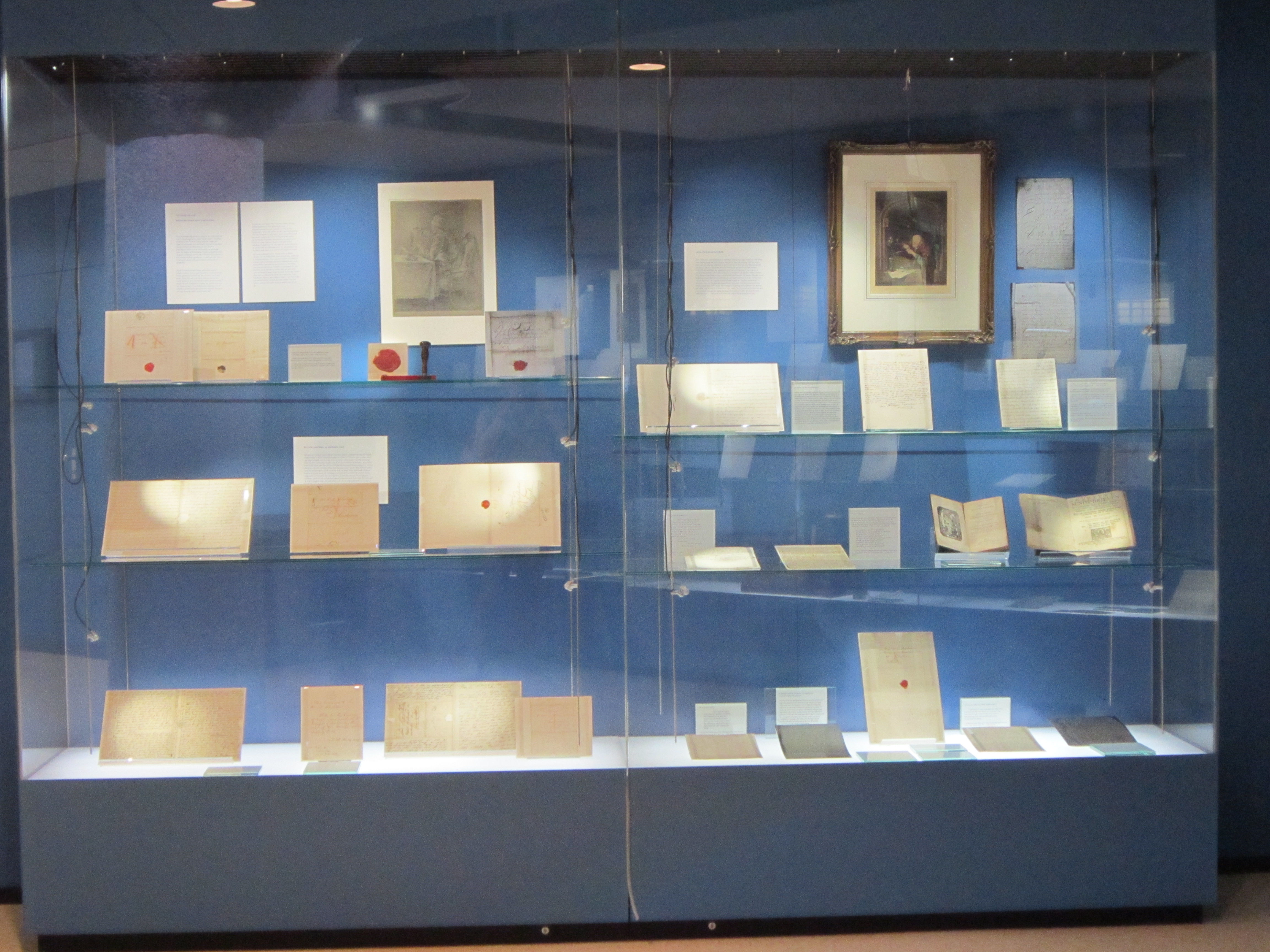
Last year, an exhibition was held at the Leiden University Library of letters from the late
modern period, Dutch as well as English ones. It was called Ach schrijf mij toch!, which expresses the need for letters from far-away loved ones, but letters were also on display from English scholars to their Leiden colleagues. Some famous names of letter writers include Sir Joseph Banks, James Boswell and his father Alexander Boswell, Lord Auchinlek,  William Jones, Charles Darwin and many others. All letters are in the possession of the Leiden University Library.

The exhibition can be visited online, though the accompanying text is entirely in Dutch, but the following image may give get some impression of what the exhibition was like. More pictures will follow. I’d appreciate help to translate the text of the online exhibition into English!

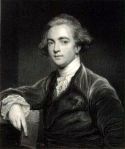
Source image Sir William Jones: Wikipedia.

Posted in 18th-century letters, 19th-century letters | Tagged , | Leave a comment

Napoleon writing in English

This summer, a letter from Napoleon was auctioned, written in 1816 and addressed to his teacher. It was meant as an exercise, to practice his English. The article in NRC-Next which announced the news, suggests that he still had a lot to learn, as the letter starts off as follows:

“it is two o’clock after midnight, I have enow sleep, I go then finish the night with you.”

The comment was probably inspired by the unusual word order, but what strikes me is his use of enow, for enough: at this late date? Or would it be a spelling error? Also, he doesn’t use a capital for I. So yes, he does seem to have a lot to learn still. Any more comments on his skill in English?

I haven’t seen a full transcription of the letter yet: this would be most welcome.

The letter fetched €325,000: what an incredible amount of money.


Source image Napoleon’s letter: NRC Next.

Posted in 19th-century letters, news | Tagged , | 3 Comments

The Browning love letters

The Letters of Robert Browning and Elizabeth Barrett Barrett (1845-1846) is a lovely two-volume copy, published in London in 1913 (new edition). The original edition had been published in 1898, by Harper and Brothers. The editor of the letters, not mentioned on the title-page, refers to himself as R.B.B. This was Robert Barrett Browning, the Brownings’ only son who received the letters shortly before his father’s death, with the words: “There they are, do with them as you please when I’m dead and gone!” (“Note”).
What did RBB do to the letters when he edited them? In the “Advertisement” he mentions that they are “printed exactly as [they] appear in the original letters, without alteration, except in respect of obvious slips of the pen”. But what were these slips of the pen? To people interested in the history of English – and any linguist perhaps – these might be very informative. And what did RBB mean by “slips of the pen”, a double in helpfull, or –or instead of –our in color? These may still have been common variants in letters of the mid-nineteenth century, and we won’t know until we see them what their status was.

Furthermore, how faithfully did RBB copy the letters? Comparing Jane Austen’s letters, the ones which have come down in manuscript, to those that only exist in the form of copies made by her relatives for the purpose of publication, I found many differences between them. Jane Austen had peculiar spelling habits, such as that she wrote Adeiu for Adieu, but none of these forms occur in the copied letters. And what about the Browning love letters? All these things we will have to reckon with when analysing the language of the letters.

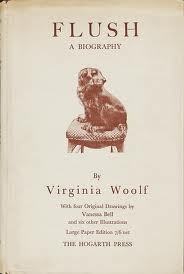
Kingsley Amis wrote a short story about how the Brownings met, and why Elizabeth’s father was against their marriage. It is called “Mr Barrett’s secret” (Mr Barrett’s secret and other stories, London: Hutchinson, 1983). And there is the lovely story of Flush, Elizabeth’s spaniel dog, written by Virginia Woolf (Flush, a biography, Penguin, 1933). Both are well worth reading.
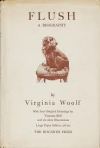
 

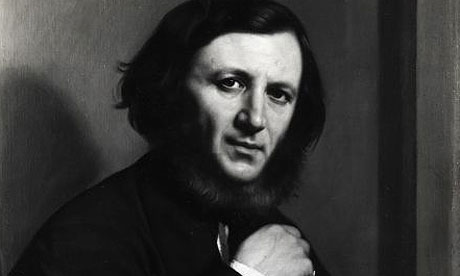
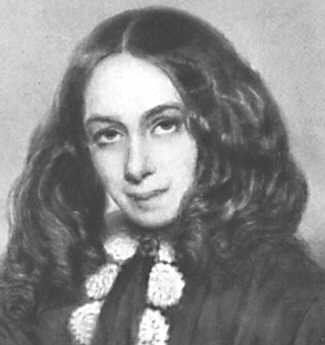
Source images: Robert Browning, Elizabeth Barrett Browning, Flush.

Posted in 19th-century letters | Tagged , | Leave a comment

MA course on letters at Leiden

Next semester, an MA course will be taught at the University of Leiden called Letters as Sociohistorical-linguistic documents:

Sociolinguists want to get access to informal spoken language – an impossible aim for the historical sociolinguist. In this course we will look at the next-best option: the language of private, informal letters, and we will draw on these letters as an object of sociolinguistic analysis. The focus will be on the Late Modern English period (1700 – 1900), and on published and unpublished letters by famous and not-so-famous people, ranging from Jane Austen, Mrs Montagu and Robert Lowth to William and Elizabeth Clift. We will study handwriting, letter-writing conventions and the postal system; the spelling, vocabulary and grammar of the language of letters; and we will correlate our findings with sociolinguistic variables such as the writer’s social and regional origin, age, gender and education as well as social network membership.

You will find more information on the course here.

The letter shown in this post is from Mrs Montagu, one of the members of the Bluestocking Circle to which she belonged. The letters is currently on display on the website for Dr Johnson’s House in London, in connection with a display on Elizabeth Carter, one of Mrs Montagu’s fellow Buestockings. Attempts at transcribing it will we welcome, and are encouraged by means of a comment on this blog.

Thanks to Marian Rietdijk for her correction!

Posted in news | Tagged , , | 6 Comments

Boswell in Leiden

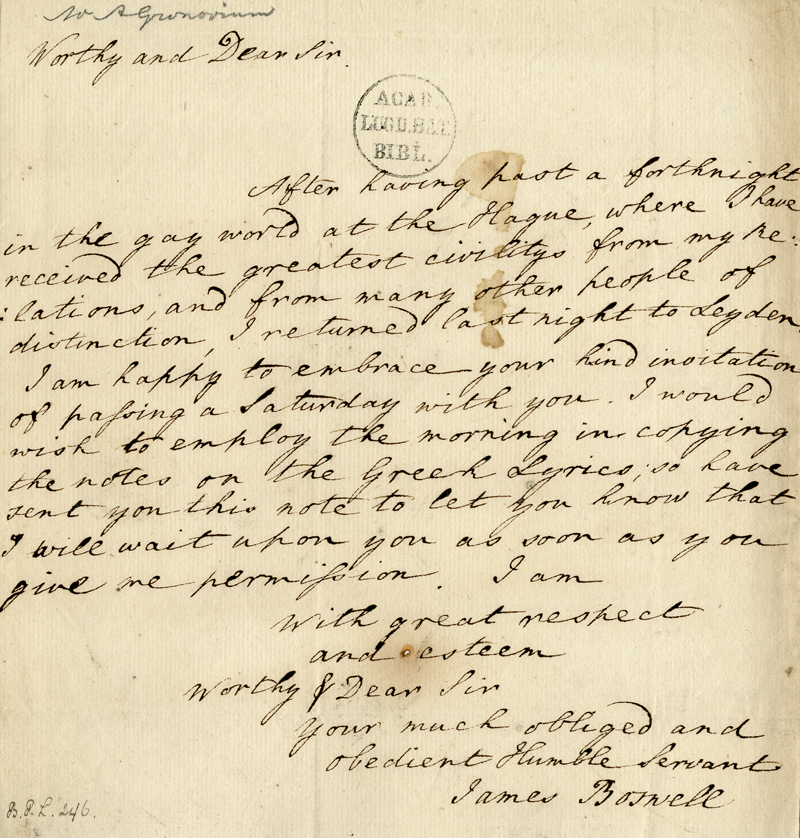
Source: University of Leiden, BPL 246/ Boswell 1763/1764). The letter is addressed to Abraham Gronovius, (1695-1775), Librarian of the University of Leiden. Gronovius was a former fellow student of James Boswell’s father. The letter is undated, but it must have been written some time between 21 December 1763 and 7 January 1764. 

This is a transcription of the letter:

                                     Worthy and Dear Sir.

After having past a forthnight in the gay world at the Hague, where I have received the greatest civilitys from my Re::lations, and from many other people of distinction, I returned last night to Leyden. I am happy to embrace your kind invitation of passing a Saturday with you. I would wish to employ the morning in copying the notes on the Greek Lyrics; so have sent you this note to let you know that I will wait upon you as soon as you give me permission.         I am

With great respect/ and esteem/ Worthy & Dear Sir

Your much obliged and/ obedient Humble Servant

James Boswell

The image shows Boswell around the time he wrote the letter (source).

Posted in 18th-century letters | Tagged , | Leave a comment