Language of the Browning letters

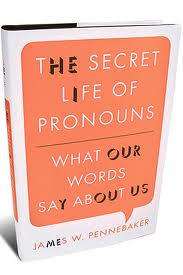
Looking for studies on the language of the Browning letters I was reminded of James Pennebaker’s discussion of pronouns in the works of Elizabeth Barrett Browning and Robert Browning. See his intreaguing and very readable (though non-linguistic) book called  The Secret Life of Pronouns. What our words say about us (2011, Bloomsbury Press, pp. 218-220).

I was also advised to keep an eye out for publications on their language in the journal Victorian Poetry. “Any substantial studies on the topic,” my informant told me, “would probably show up there.”  Thanks for all this, Jennifer McDonell!

Posted in Uncategorized | Leave a comment

John Wesley’s letters online

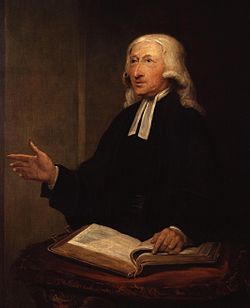
One of the best introductions to 18th-century letter writing is that by Frank Baker in Vol. 1 of the edition of John Wesley’s letters. Wesley was a Methodist minister who lived from 1703–1791, and he was a voluminous letter writer. There is a collection of letters from his hand available online called the Letters of John Wesley at Bridwell Library. This is a digital collection which presents 138 letters by Wesley letters, in the form of scans along their transcriptions. According to the website, these transcriptions are fully searchable.

Reference:

Baker, Frank (1980), The Works of John Wesley, Vol. 25, Letters I, 1721-1739, Oxford: Clarendon Press.

Posted in Uncategorized | 2 Comments

On long s

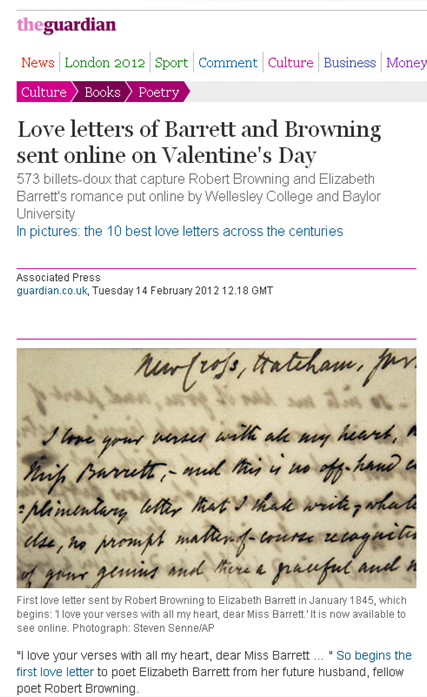
Long <s> is a typical feature of 18th-century English spelling, as James Boswell’s letter, reproduced elsewhere in this blog, shows. But though it disappeared from printed texts around the turn of the 18th to the 19th century, it still appears in private letters as late as 1845. There are various instances of long <s> in the first Browning love letter made available online on Valentine’s day (see the image below).

Just recently, an article came out on the history of long <s>, by Lyda Fens-de Zeeuw and Robin Straaijer, called “Long-s in Late Modern English Manuscripts“, English Language & Linguistics 16/2, 319-338.

Posted in 18th-century letters, 19th-century letters, news | Tagged | Leave a comment

The Browning love letters

On Valentine’s Day, the Guardian announced the online publication of the Browning love letters, letters exchanged between Robert Browning and Elizabeth Barrett Barrett, which I also reported on elsewhere in this blog.

The article mentions that there are 573 letters, and a first glance at the project shows what a fantastic resource this is.  Not only are the letters presented in images, including the back and front of the envelopes, but the letters are also available in transcription. What is more, the image can be shown alongside the text, which facilitates the reading of the original handwriting. The text can be copied and pasted into text documents for analysis with a concordancing tool, though at the moment I can’t see how this can be down more quickly than through page-by-page downloading. This should be quite a job for all 573 letters once they will be available, but it would enable us to do real corpus-based research on them. Something to look forward to, definitely

Posted in 19th-century letters, news | Tagged , | Leave a comment

Studies on Late Modern English letters

The following is a list of book-length studies on Late Modern English letters, from a linguistic, discourse-analytical or sociohistorical perspective. Additions are very welcome.

  • Fens-de Zeeuw, Lyda (2011). Lindley Murray (1745-1826), Quaker and Grammarian. Utrecht: LOT.
  • Fitzmaurice, Susan (2002). The Familiar Letter in Early Modern English Amsterdam/Philadelphia: John Benjamins.
  • Sairio, Anni (2009). Language and Letters of the Bluestocking Network. Sociolinguistic Issues in Eighteenth-century Epistolary English. Helsinki: Société Néophilologique.
  • Straaijer, Robin (2011). Joseph Priestley Grammarian: Late Modern English Normatism and Usage in a Sociohistorical Context. Utrecht: LOT.
  • Tieken-Boon van Ostade, Ingrid (2012). The Bishop’s Grammar. Robert Lowth and the Rise of Prescriptivism. Oxford: Oxford University Press.
  • Tillyard, Stella (1994). Aristocrats: Caroline, Emily, Louisa, and Sarah Lennox 1740-1832. New York: Farrar, Straus and Giroux.
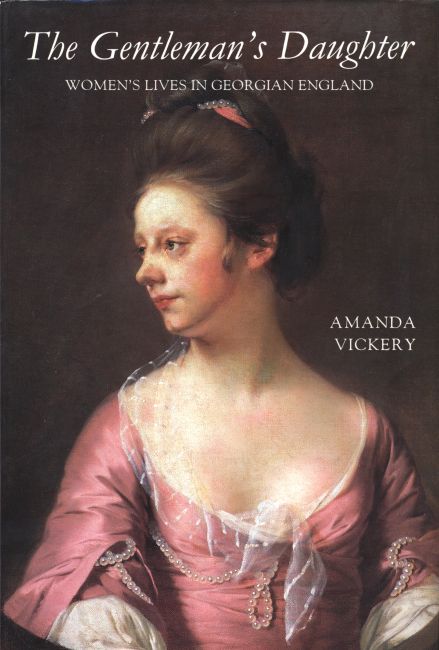
  • Vickery, Amanda (1998). The Gentleman’s Daughter. Women’s Lives in Georgian England.New Haven and London: Yale University Press.
  • Whyman, Susan (2009). The Pen and the People. English Letter Writers 1660-1800. Oxford: Oxford University Press.
Posted in 18th-century letters, 19th-century letters | Tagged | Leave a comment

Julia Maitland’s letters

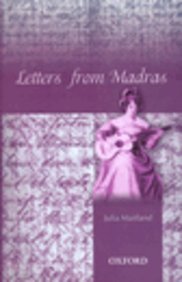
Julia Maitland (1808-1864) is the author of the book Letters from Madras during the years 1836-1839, originally published by John Murray in London, in 1843, and re-issued by Alyson Price in 2004 (OUP, New Delhi). The book includes 27 letters which are unfortuntely not based on the original autograph letters: Julia herself rearranged and prepared them for publication at the time, including passages from other letters to present coherent narratives. This practice was not uncommon at the time, as we know from what Charlotte Barrrett did to Fanny Burney’s letters .

A review of another reissue of the book appeared in the online Camden New Journal in 2003: it focuses on Julia’s happy stay in India, where she attempted to learn various native languages, and set up schools and libraries to educate children in the area in which she lived.

From a social network perspective, Julia Maitland is an interesting person: the Introduction describes her as the daughter of the Charlotte Barrett who edited Fanny Burney’s letters, and continues saying that her grandmother “was a younger sister of the novelist Fanny Burney and daughter of the historian of music Dr Charles Burney” (p. ix).

Though we have to be careful in analysing the language of the letters, I have come across a number of interesting usages that deserve further analysis in a wider Late Modern English context:

  • Julia took evident pleasure in rendering the speech she heard around her naturalistically. So on p. 7 she quotes her Irish maid saying “Sure, it’s for you to ate, ma’am” (see also pp. 32, 112), and on p. 106 she comments on a woman saying, “very innocently”, pertickler. The woman was the wife of a shoemaker, and they had gone to India as missionaries. On p. 162 she quotes a sergeant saying theirselves rather then themselves, another sociolinguistic comment
  • like Jane Austen, she used the unusual conclusion “Good-bye” in the first letter (p. 9)
  • in letter 4, she used for that instead of because, which I don’t think I’ve ever come across: “sailors say it was an absurd notion, for that the winds and currents make it …” (p. 21)
  • in letter 6, we find “Dr Bell his sytem” rather than “Dr Bell’s stystem”: this usage had already been criticised in Robert Lowth’s grammar (1762), but it was fairly widespread. This looks like a fairly late instance though
  • we still find double negatives in her letters: “nor I don’t wish to” (p. 41), though this is the only instance
  • she was an inveterate user or be rather than have with mutative intransitive verbs, as in “After her performance was ended” (p. 44) and “Mr and Mrs Staunton are gone today to the wedding of …” (p. 55) (see Rydén and Brorström 1987)
  • we still find inversion of subject and finite after a clause-initial adverb: “To-day arrived the little parcel” (p. 101), which was fairly common in 18th-century English (Tieken-Boon van Ostade 1987), but which eventually disappeared
  • the word Government Julia saw as requiring plural concord with the finite (pp. 112, 129)
  • and she used the preposition in where we would now use on, as in “in our way hither” (p. 143)
  • also like Jane Austen she used the occasional flat adverb: “near one hundred thousand” (p. 170)
  • “Preparations are making” (p. 185) is an example of the passival (see Pratt and Denison 2000), for which we would now use “are being made”
  • Julia’s use of the word Collectress (p. 185) in the sense of “wife of a collector”, the title of a chief administrator in India, is not in the OED (cf. the OED‘s discussion of the comparable word bishopess, “wife of a bishop”)

Plenty of interesting linguistic material in the letters, in other words, alongside important information on letter writing and the overseas postal system at the time. The 1843 edition of the book can be consulted through Google Books, but the modern edition can be ordered directly from India, at a bit over 5 euros.

References:

Pratt, Lynda and David Denison (2000), ‘The language of the Southey-Coleridge Circle’, Language Sciences 22: 401-22.

Rydén, Mats and Sverker Brorström (1987), The Be/Have Variation with Intransitives in English, Stockholm: Almqvist & Wiksell International.

Tieken-Boon van Ostade, Ingrid (1987) The Auxiliary Do in Eighteenth-Century English: A Sociohistorical Linguistic Approach. Dordrecht: Foris

Tieken-Boon van Ostade, Ingrid (1991) “Stripping the layers: Language and content of Fanny Burney’s early journals”. English Studies 72. 146–59.

Posted in 19th-century letters | Tagged , | 1 Comment

Peter Lang’s series Linguistic Insights

The publisher Peter Lang just distributed a catalogue with an overview of their impressive series called Linguistic Insights, Studies in language and communication, edited by Maurizio Gotti from the University of Bergamo.

The series contains several titles that are relevant for the study of the language of Late Modern English letters:

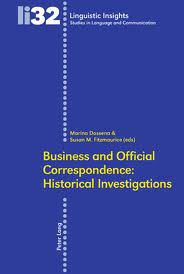
  • Marina Dossena and Susan M. Fitzmaurice (eds.), Business and Official Correspondence: Historical Investigations (2006)
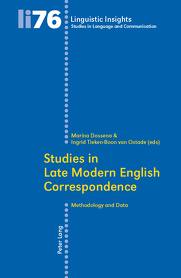
  • Marina Dossena and Ingrid Tieken-Boon van Ostade (eds.), Studies in Late Modern English Correspondence (2008).

But apart from these there are many other titles that will of interest for this subject and that are therefore well worth reading.

Posted in 18th-century letters, 19th-century letters, news | Tagged | Leave a comment

The Pen and the People

This is the title of a magnificent study by Susan Whyman. Its subtitle is English Letter Writers 1660-1800, and the book was first published in 2009 by Oxford University Press.

It analyses a host of letters from the period, but focusses on six letter collections by people from the middling sort, as they would refer to themselves. The study shows that letter writing was developing into an important medium for people to get on in life, for men and women alike, to express literary ideas and religious thoughts, and that epistolary fiction and private letter writing are intricately intertwined. Read the abstract on Oxford Scholarship Online, but more than that, read the book itself!

The book is a social history, but its many quotations show that the letters used would be fascinating material to analyse linguistically. One example has been discussed on the Robert Lowth blog.

Posted in 18th-century letters | Tagged , | Leave a comment

Studying the language of letters

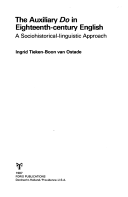
If you write a PhD in the Netherlands, you usually have to supply a set of so-called “stellingen” (scholarly propositions) along with the printed book. I defended my PhD in 1987, and my thesis was called The Auxiliary Do in Eighteenth-Century English. (At the moment, there doesn’t seem to be a nice image of the book around on the web to illustrate this post with, but I’ll see to this soon.)

Looking at my stellingen the other day, I was struck by numer VI:

Er zou meer onderzoek moeten worden gedaan naar taalgebruik in brieven (“There ought to be more research into the language of letters”).

I wrote this in 1987: now, twenty-five years later, much research has indeed been done, and this blog will present that research but also show what more research can be done. First, to make a start, invitations are out for people to send information on publications that they have, so that between us we can compile a good working bibliography on the subject. So: please feel free to get in touch via this blog.

Source of the image: google books.

Posted in 18th-century letters, 19th-century letters | Tagged | Leave a comment

Horace Walpole’s letters online

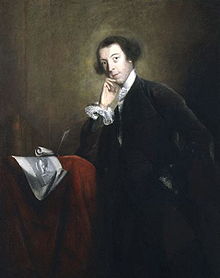
Horace Walpole was an inveterate letter writer, and his correspondence is probably the largest collection of letters that is available for analysis, linguistic and otherwise. Froukje Henstra is writing a PhD thesis on the language of the letters.

A short while ago, she discovered that Walpole’s letters are now available online, and freely so. We hope that if you are interested in using this database for research, you will share your experiences with us.

Source image: wikipedia.

Posted in 18th-century letters, news | Tagged | Leave a comment