Free online letter database

As I was just searching on the internet for information about Charles Dickens, I found an amazing site on which a large variety of letters by various authors have been posted. To me, as I’m doing research on the relationship between Dickens and his wife Catherine, it proves very useful since much of their correspondence has been placed on this site. Since there are a lot more writers on this site to be found, including parts of their correspondences, I would like to share this site with you.

Charles Dickens letter surfaces after 150 years

(Mr and Mrs Dickens)

Another thing I found out is, that recently a letter (see below) was found from Dickens to his lawyer, Mr Ouvray, in which he proposes a settlement for his wife of 600 pounds a year. (He has even underlined the sentence to emphasise his decision.) It was known that Dickens separated from his wife and left her for an 18-year-old actress: Ellen Ternan (see picture below). However, since Dickens didn’t want to attract too much attention to it, there hadn’t been found documents recording the actual amount of money offered. He definately wanted his marriage to be over, which is underlined by the words he uses in this letter when referring to his wife: she and her. He doesn’t mention her name.

(Letter to Mr Ouvray, Dickens’s lawyer)

(Ellen Ternan)

(source: www. telegraph.co.uk)

Posted in Uncategorized | 2 Comments

Self-corrections and prepositions

This week, we are reading Anita Auer’s article on self-corrections in Late Modern English letters (Auer 2008). In this article, Auer discusses three case studies, and one of them concerns the letters of Lucy Whitaker (1759-1837), the wife of a topographer and antiquary according to the entry on her husband in the Oxford Dictionary of National Biography. There are not many self-corrections in the letters: Auer lists nine in all, but one of them shows a correction of the preposition at into in, resulting in I fear at this time of year in so bad a season (Auer 2008:229), and this has led her to conclude that “she was clearly aware of … how to use prepositions”.

I agree, and find this extremely interesting because I have found a similar awareness of the correct use of prepositions in Jane Austen’s letters.

There, I found as many as ten of them altogether, in a corpus of letters that comprises ca. 145,000 words:

    • she will now be able to jest openly over about Mr W. (letter 10)
    • from all that can constitute enjoyment to with her (letter 43)
    • they were in a general way spoken away of. (letter 61)
    • to come back into her old Neighbourhood again (letter 67)
    • not much of upon the Stall, (letter 89)
    • than all the Mystery I can by of it (letter 90)
    • which do not often meet with in one (letter 109)
    • know how I could have accounted for by the parcel otherwise (letter 109)
    • with by Collier’s Southampton Coach (letter 139)
    • but his manner in of reply (letter 155).

I find this amazing: neither woman had had a great deal of formal schooling, but is the use of prepositions something they would have mastered better if they had been to school? Or do we see here that the use of prepositions at the time was still to some extent variable, more so at any rate than today?

Reference:

Auer, Anita (2008), “The letter which that I wrote”: Self-corrections in Late Modern English letters. In: Marina Dossena and Ingrid Tieken-Boon van Ostade (eds), Studies in Late Modern English Correspondence: Methodology and Data. Bern etc.: Peter Lang. 213-234.

Posted in 18th-century letters, 19th-century letters | Tagged , | Leave a comment

Lowth letters in Leiden

Great news: Leiden University Library owns two letters from the most authoritative 18th-century English grammarian, Robert Lowth (1710-1787). They were identified accidentally by Myrte Wouterse, BA English and Honours Academy student at the University of Leiden.

Myrte and a fellow student had been taken to the library by their teacher Thijs Porck, who wanted to introduce them to the Library’s Special Collections. When they asked to see a letter by the orientalist Sir William Jones, they were shown the diary of one of Jones’s correspondents, his Dutch fellow orientalist H.A. Schultens (1749-1793). Schultens was spending a year in Oxford to study some Arabic manuscripts  there. At Oxford, he met Thomas Henry Lowth (1753-1778), Bishop Robert Lowth’s son, and it was through Thomas Henry that Schultens approached Lowth to try and help him obtain an MA from Oxford. An early example of social networking!

Myrte is working on a presentation on the letters for the third year BA course “Introduction to Late Modern English”, taught by Ingrid Tieken-Boon van Ostade. The paper is due next week: after that, she will be able to report more on the context of the letters as well as on their contents.
The discovery of the letters came as a complete surprise to Ingrid Tieken-Boon van Ostade, author of The Bishop’s Grammar, Robert Lowth and the Rise of Prescriptivism (OUP, 2011): she had been collecting letters by Lowth for years without knowing some of them were so close by. They plan to write an article on the letters and what they mean for current research on Lowth but primarily on H.A. Schultens in the near future.

Schultens’ diary from the period of his stay in Oxford has been published online.

Posted in 18th-century letters, news | Tagged , , | Leave a comment

The relative pronoun which in the Clift Family Correspondence

Frances Austin (1985) points out in her paper named Relative Which in Late 18th Century Usage: The Clift Family Correspondence that the relative pronoun which in the eighteenth century was not predominantly used for inanimate objects (pp.15-29). Instead this relative pronoun was sometimes implemented in sentences “with a personal or human antecedent. The three oldest writers, Elizabeth, John and Thomas all occasionally use which with a personal antecedent” (1985, p. 17). At least three of the six siblings in the Clift family combined in their letters the relative pronoun which with a human antecedent. However, the usage of the relative pronoun who in combination with a personal antecedent has been a widespread practice since the seventeenth century. Nonetheless, some famous grammarians also still used the relative pronoun which with human antecedents. For instance, Noah Webster used the relative pronouns which with both human and inanimate antecedents in his texts from 1807 (1985, p. 18). Even though eighteenth century grammarians restricted the grammatical usage of the relative pronoun which to only inanimate objects, analyses of eighteenth century letters prove that this was not always the case.

References

Austen, Frances. (1985). “Relative Which in Late 18th CenturyUsage: The Clift Family Correspondence” In: Roger Eaton et al. (eds). Papers from the 4th International Conference on English Historical Linguistics. Amsterdam: John Benjamins Publishing Company.


Posted in 18th-century letters, letter writing | Tagged | Leave a comment

Letter Drawings?

After having finished an essay on gender variation, I started reading through the Browning Letters again (taking it a couple of letters at a time). Their letters are filled with humorous phrases: “to dramatic impersonations, gruff with nature, “gr-r- you swine”” (Barrett 17 Feb 1845:5) and many uses of the .. which is both a hesitation punctuation and which functions like a comma at times (a natural pauze): “What I was going to say .. after a little natural hesitation .. is” (Barrett 11 Jan 1845:2); “I think I can do it, that is-  .. Here an odd memory comes .. of a friend who” (Browning 27 Jan 1845:2).

In the 16th letter of the correspondence, I came across something I have never seen before. But then again, it is not as if I have read many, many letters. I have the feeling that in this letter he is trying to cheer Miss Barrett up since she has yet to answer his last letter and her being somewhat under the weather due to her illness. Or maybe this is one of the letters that is missing, as two weeks have passed since he wrote a letter to her. At the end of the letter, Mr Browning writes “Three scratches with a pen, even with this pen,-and you have the green little Syrenusæ where I have sate and heard the quails sing.” (15 April 1845:4). And so he drew, somewhat more than three scratches, mind you:

15 April 1845, Robert Browning (Page 4)

Has anyone else come across a drawing in a letter? The first time I saw it without reading the letter, I thought it was an animal resting on a very small hill. I am not sure what the drawing is supposed to be but, after reading the letter, I imagine it to be mountains in Syracuse, Sicily, since that is what he referred to in the letter? Would you agree?

References
Barrett, Elizabeth (11 Jan 1845; 17 Feb 1845). http://digitalcollections.baylor.edu/cdm/landingpage/collection/ab-letters. Accessed on: 28 October 2012.
Browning, Robert (27 Jan 1845; 15 April 1845). http://digitalcollections.baylor.edu/cdm/landingpage/collection/ab-letters. Accessed on: 28 October 2012.

Posted in 19th-century letters, letter writing | Tagged , | 1 Comment

Fanny Burney in King’s Lynn

King’s Lynn is a small town on the coast of Norfolk in England, about 45 miles North of Cambridge. It used to be one of the four major English harbours, and it has a Hanseatic connection as well as several houses with Dutch gables. But my real reason for a visit last week was the fact that the novelist and famous diarist and letter-writer Fanny Burney (1752-1840) had been born there.
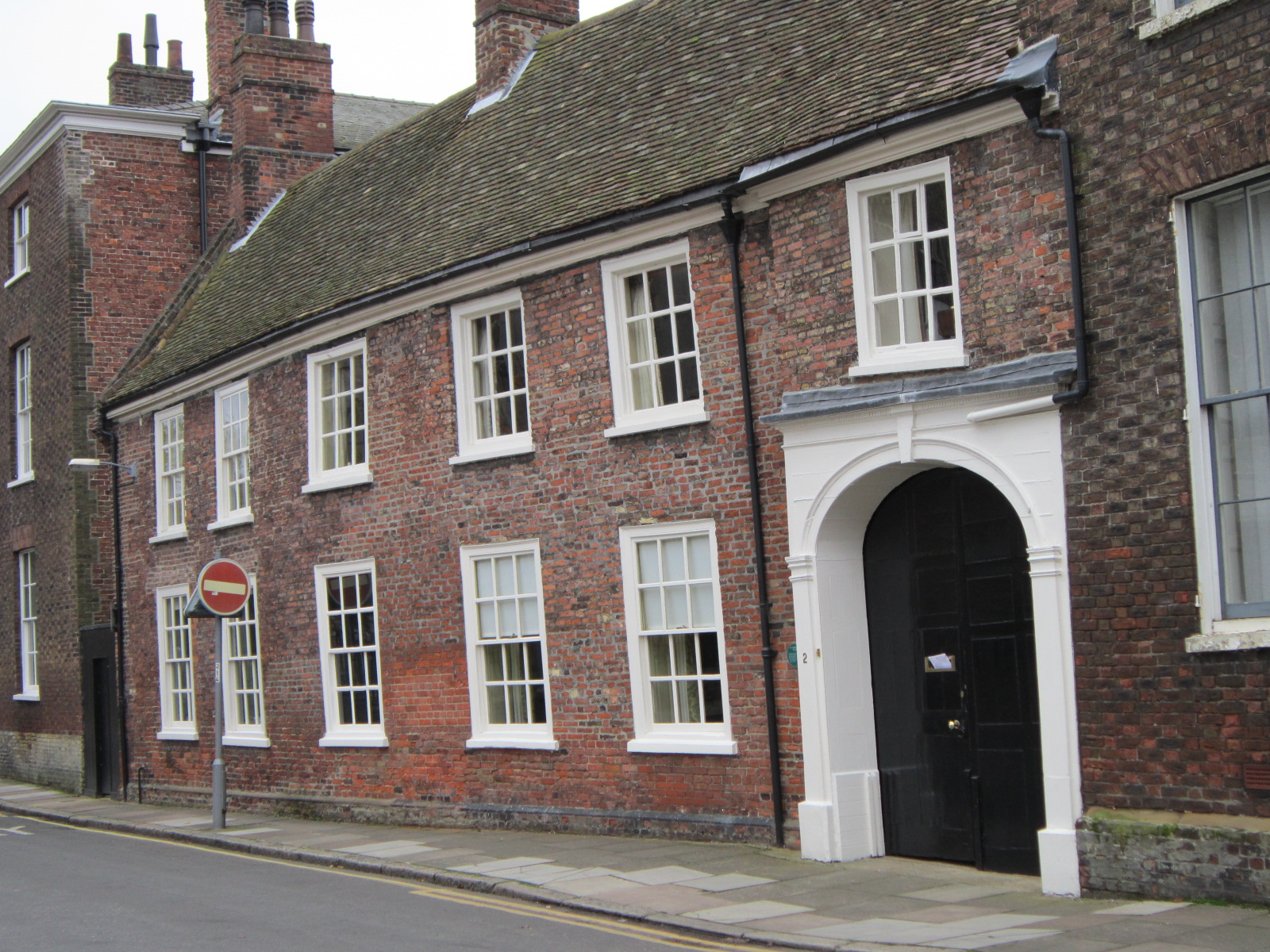
So we asked at the Tourist Information centre where in King’s Lynn we could find the Burney house. They directed us to a house opposite St Margaret’s Church along the Tuesday market. This was a house with a crooked window from which it was believed that Fanny Burney would look at the church, at least according to several references in her journal letters. “It was believed” indeed, for though it was a lovely house, the original Burney mansion no longer exists, according to a plaque on a house a few doors away. A lovely house, crooked window and all, but NOT Fanny Burney’s house after all. But the Church (very crooked too!) she would have frequently seen, and she would have frequented the streets and markets of the lovely town King’s Lynn.
Fanny Burney’s collected letters present a wealth of material, including conversations she reported on in what was recognised at the time as a very naturalistic style, real speech perhaps, in other words. An overview of the published volumes of the early as well as the later letters, and also those of her father, the Music historian Charles Burney (1726-1814), may be found on the website of the Burney Centre at McGill University.

Posted in 18th-century letters, 19th-century letters | Tagged , | Leave a comment

The Carlyle Letters Online

Image from the Wikipedia entry for Jane Welsh Carlyle

While browsing through my bookmarks looking for letter corpora, I re-encountered a great resource: The Carlyle Letters Online. This digital archive contains over 10,000 of the collected letters of the important Victorian couple Thomas and Jane Welsh Carlyle.

The content of The Carlyle Letters Online is based on the Duke-Edinburgh edition of The Collected Letters of Thomas and Jane Welsh Carlyle and presented by Duke University Press. This video provides some background on the project. The Carlyle Letters website contains interesting information on a variety of topics including how to search and cite material from the digital archive.

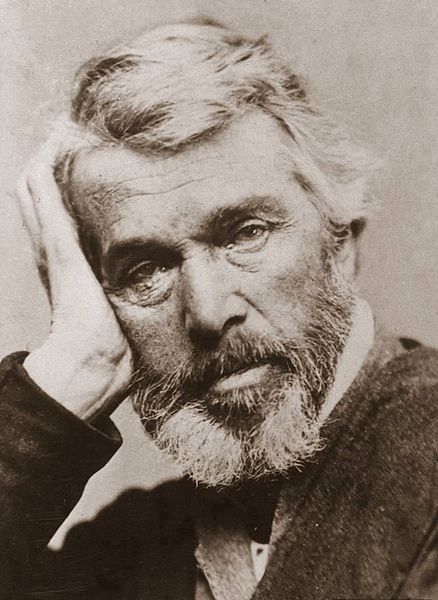
Image from the Wikipedia entry for Thomas Carlyle

I found the possibility of browsing through the letters by recipient particularly attractive as the Carlyle’s ‘correspondents of interest’ include Charles Dickens, Elizabeth Gaskell, and John Stuart Mill – among many others. This unique corpus will delight those who enjoy the language of letters, Victorian culture, or epistolary things more generally.

Posted in 19th-century letters, letter writing | Tagged , | Leave a comment

Children’s letters again…

When searching for information on children’s letters on the internet, I found a fantastic site which offers a variety of books that can be accessed freely online. I was searching the archives for children’s correspondences and I found this book:


This book is a compilation of several famous authors that have written to children. Also included are a number of children’s replies. What struck me was that the language and formulas used, seemed different to me than when addressing adults in contemporary correspondences. It would be interesting to find out if a difference in the use of language can be found, and if so, what is/are the difference(s) exactly?


Posted in Uncategorized | Leave a comment

Richardson’s letters in Italian

A few years ago, Donatella Montini, from the Sapienza Università of Rome, published an edition of letters by Samuel Richardson which focused on the making of Clarissa. For this edition, which came out in 2009, she translated a selection of the letters into Italian. The book is called Lettere su Clarissa. Scrittura privata e romanzo nell’Epistolario di Samuel Richardson (Viterbo Sette Città).

An example of such a letter is the following:

14 Dec. 1748

Samuel Richardson to Astraea and Minerva Hill

What Pride you give me in your Approbation of my Clarissa! – And how charmingly just is your Correction of Miss Howe! Would you not wonder, were you to hear, that such there are as prefer that lively Girl to her? And still more, were you to be assured, that there are Numbers of your Sex, who pity the Lovelace you are affrighted at, and call Clarissa perverse, over-delicate, and Hard-hearted; and contend, that she ought to have married him?

For a continuation of her project, Donatella is interested in a number of research questions, relating in particular to his female correspondents. What exactly, she would like to know, had the Hill sisters written to Samuel Richardson about Clarissa, Miss Howe and Lovelace? Where are their letters? And where are the letters written by the various Misses Chapone, Westcomb, Grainger, Mulso, etc., all members of  Richardson’s circle of  women who exchanged letters on the novelist’s epistolary fictional stories, and on their non fictional lives? Help and advice on where to locate these letters will be greatly appreciated.

Posted in 18th-century letters | Tagged , , | Leave a comment

Molly short for Mary?

When I first started working on Robert Lowth’s letters, and in particular on the letters he had written to his wife Mary, I happened to tell a colleague about them. The colleague was surprised to find that Lowth’s private name for Mary was Molly, as this seemed very unusual to him. But the Lowths also had a daughter called Molly, or Mary in full, and in the letters he frequently refers to her as “ye. [the] dear little Molly”, and even as “ye. little Mollykin” and, using another endearment device, as “the dear Toms [Lowth’s eldest son] & Mollys”.

So it was interesting to read that John Wesley, too, addressed his wife Mary as Molly, as Annemiek Korf shows elsewhere in this blog. So this form of endearment for the name Mary turns out not to be so uncommon after all. Another Mary-called-Molly is Molly Pitcher, whose full name was Mary Ludwig Hays McCauley (1754-1832). A fascinating woman, I would say, as she is described as a camp follower but also, as this image illustrates, as a soldier!

Any other Molly’s, heroic or otherwise?


Posted in Uncategorized | Tagged , | 5 Comments